Information about work, life and play in Regional Australia

Showing posts sorted by relevance for query travel time. Sort by date Show all posts

Thursday, August 24, 2006

Sydney or the Bush - a few numbers

I like Sydney.

For several years when I was young we used to come for seaside holidays at Manly, staying in a private hotel near the beach. The hot pavements, the seaside stores where we brought drinks, going into the city for the day, all were fun. Then I came to Sydney sometimes to play sport, to run at the GPS athletics, to play Rugby. Again fun. Travelling in holidays to stay with a friend a Molong, the break in trains meant that I spent a day in the city on the way down and back. So I wondered around, looking at the buildings and going to the pictures.

A little later I worked here for a short period, staying in a flat at McMahon's Point while working in the city. Later still I had girlfriends here, so I used to drive or fly up from Canberra for the weekend. Each weekend I would spend travelling round, trying new places to eat, visiting galleries and bookshops, going to the theatre. Then I had to spend time in the city on business, usually staying at the same hotel in the Cross and visiting my favourite restaurants.

So Sydney was fun, and I knew it very well.

I now live in Sydney. We have lived here for the last nine years because my wife is a Sydney girl. All her family lives in the Eastern Suburbs and she wanted to come home. This was the right decision from a family viewpoint. My wife has enjoyed being close to her family, our daughters have made many friends here and like aspects of the city lifestyle.

So we are here at least until the youngest finishes school. At the same time, I am becoming increasingly conscious of the problems with this place - Sydney - and the trade-offs we have had to make to live here. The beauty is still there, so are some of the things I used to like. The difficulty is that living here with a family as compared to visiting really makes for an uncivilised life style.

I want to explain this, comparing Rosebery where we now live with Armidale. I have selected Armidale because it has - minus the sea - a comparable life style to the eastern suburbs, while I know it very well. Similar analysis can be applied to other suburbs, other towns with the mix depending on varying interests and life styles.

Rosebery first.

Until very recently, Rosebery was one of the undiscovered secrets of Sydney. An inner city suburb (it is about 6k from the centre of Sydney), Rosebery sits close to the start points of the northern and southern express ways. It is a mixed suburb, part industrial, part residential.

Rosebery has many good features beyond location. Settled by Greeks just after the Second World War, our local MFC supermarket has windows stacked with tins of olive oil, bins with a wide variety of olives, cheese etc, and has been written up in Sydney's Good Food Guide. The girls love the nearby factory outlets. Overall, there is an attractive, cosmopolitan feel about the suburb.

So when I compare Rosebery with Armidale I am taking a good part of Sydney as my base.

Now Armidale. It is a university city of 22,000 people located on the New England Tablelands midway between Sydney and Brisbane. Set in beautiful countryside, it is an attractive city in visual terms with excellent facilities.

The comparison. Here I want to focus on things that are different. So, for example, I will ignore food. Food costs are much the same. There is also little difference in variety. If anything, Armidale has greater variety taking reasonable travel times into account.

Let's start with housing. We cannot afford to buy in Rosebery where house prices have now passed the million dollar mark. Armidale average house prices are less than a third of this. So we have to rent.

Rosebery rents are lower than, say, Kensington, higher than Mascot. We are presently paying $490 a week for a three bedroom house. The house is small by the standards I am used to, but has a reasonable size yard.

To compare this with Armidale I did a current rent check. The most expensive house I could find in Armidale had seven bedrooms, two bathrooms, internet connections throughout. The rent (negotiable) was $ 450 per week.

The nearest equivalent houses that I could find to our Rosebery house were rentable at $230 per week. Putting this in dollar terms, we need as a family to earn an extra $13,250 per annum after tax for the same standard of house in Sydney as compared to Armidale.

Given the size of Sydney houses in the area in which we want to live, I had to put my books and some household stuff in storage when we moved down. I also have some stuff in my cousin's garage in Wagga Wagga. I love my books and not having them round is a very real if intangible cost.

Storage costs $280 per month or $3,360 per annum after tax. The houses I have looked at in Armidale all had space for my things.

Turning now to school fees. When we were in Armidale, both girls were going to the New England Girl's School. When we came to Sydney, we put both girls into an Eastern suburbs Anglican school.

In Armidale our eldest was on a part scholarship. Ignoring this, Sydney school fees were about 20 per cent higher, I think more so now. Eldest daughter has just begun university, so we are paying school fees just for one. Extra cost for school fees for one around $3,200 per annum in after tax terms.

Turning now to transport. This has to be looked at in terms of time and cost.

Time first.

In Armidale, every thing in the city is within a five to eight minute drive. I could drive from work to school to pick up the girls and then home all in eight minutes. If we were going out to dinner at, say, seven, we could leave at at 6.50 to 6.55. With the exception of Sydney trips - Armidale schools often play sport in Sydney or to a lesser extent other centres - school sport was a cinch in travel terms. Out-of-town sport does involve some extra cost but not so much time because they are generally done as a coordinated school activitity independent of individual parents. With parking easy and everything well located, Saturday morning shopping was an enjoyable activity allowing plenty of time for coffee and conversation.

Because Rosebery is remarkably well located, travel is relatively easy and quick by Sydney standards. For example, I normally do my grocery shopping at Eastlakes. The centre is not as pleasant as Armidale, but travel time is in fact about the same. This is not true when we move to other activities.

My wife has been working at North Sydney, normally travelling by public transport. This is not bad, involving a bus just outside our front door with a stop outside central, then a train to North Sydney. Travel time varies depending on connections, but varies between 40 minutes to 80 minutes each way. Cost around $9 return. So in a week she spends an extra 150 to 350 minutes each week in work travel time as compared to Armidale at a cash out cost of $45 per week. Sometimes she takes the car or gets a taxi to save time. Costs then rise sharply.

I have usually worked from home because this allows me to do the main domestic duties. When I do travel it is usually to attend specific meetings. I am ignoring this element because it is just too difficult to calculate.

Daughter travel time and costs are quite complicated. But then, so is their life style. University and school first.

Eldest is doing first year business studies at the UTS campus at Kuringai. She usually takes the bus to the city campus, then the UTS shuttle from there. Return trip about four hours including connection waits, so she does not spend as much time on campus as she would if she were attending the University of New England. On her current timetable, total University travel time about twelve hours per week.

Youngest goes to school at Waverly. Bus travel involves two routes and takes around an hour each way. Because she is a school student bus travel is free. Because she often has to be at school early, I generally drive her to school and also pick her up most afternoons. Trip varies enormously because of traffic, ranging from 15-20 minutes up to 35 minutes each way. In all, these school trips take me up to five additional hours each week as compared to Armidale.

We then come to sport and other activities. This is where life gets incredibly complicated.

Both girls play sport, usually at times and in locations precluding public transport. Beside, my wife and I like to watch. Travel time varies enormously depending upon location and can range from a 30 minute to well over two hour return trip. During term time, we would spend at least four hours a week driving to venues.

Both girls have been working part time. This is a two edged sword. Work is important for a number of reasons, but then travel by public transport takes a lot of time compared to actual working hours. So we usually end up driving them part of the time, essentially subsidising the work process.

Social and other extra-curricula activities for all then have to be factored in. Again, this is more time consuming and costly involving a mix of car, taxi and public transport.

Putting all this together properly almost requires a mathematical model. However, as best I can work out taking Armidale's higher petrol prices into account, living in Sydney as compared to Armidale:

  • involves each family member in between ten and twenty hours extra travel time per week. This is time not available to other activities
  • at an extra cash out cost for petrol and fares of something over $100 per week, or $5,200 per annum.

Drawing the financial analysis together, and excluding time, I estimate the added annual cost of living in Sydney for something approaching the same life style as Armidale as roughly $25,000 broken up as follows:

  • rent $13,250
  • storage $3,360
  • school fees (one daughter) $3,200
  • added transport costs $5,200.

To meet these additional costs, we need a collective additional family income before tax of perhaps $42,000 depending upon marginal tax rates. Then there are the added time costs.

Accepting that many things come together in life style choices, accepting also that my numbers are rough, the figures show why I have real reservations about Sydney as a life style choice.

Monday, December 04, 2006

Tree Change - Deciding where do you want to live


Waiting for the Judge. Another great photo by Gordon Smith because I like it.

This post continues to story of Katrina and Tom's search for an alternative life in Regional Australia. I have listed all the previous posts at the end of this post so that those who are interested can follow the story through.

Our focus in this post shifts to ways of analysing and ranking different localities, starting from the premise that you have followed previous advice and therefore have a pretty fair idea as to your needs.

Drawing up a Table

On good technique is to start with a table. Down the left hand side put your needs as you have defined them. Then along the top put the names of the areas that you are considering. This then allows you compare the varying advantages and disadvantages of different localities by inserting comments in each box.

Time and Distance

City people are used to thinking in terms of travel time rather than distance. For some reason when they look at the regional alternative, many switch to thinking in terms of distance. This is plain dumb.

Ten minutes in the city is the same as ten minutes in regional Australia. Ten kilometres or miles is not the same because it just takes so much longer to travel the distance in the city. So its very important to compare like with like.

In an earlier post, Sydney or the Bush - a few numbers, I attempted to compare a Sydney life style with an exactly equivalent regional one.

I followed this up with a post, Understanding the Regional Alternative -Comparing Like with Like, in which I looked at the normal patterns of metro life, suggesting that people thought of this in terms of a series of circles whose size was determined by travel time. My message was that you should apply the same approach in considering the regional alternative.

In Getting the Best out of Regional Living - Wagga Wagga case study, I took a major regional city and looked at just what was offered by the broader region around the city, comparing this with the things available to Sydney people, taking travel time into account.

Drawing from all this, I suggest that you draw three circles on the map around each locality under consideration:

  • Circle one represents, say, 10-15 minutes driving time one way. This represents the normal city travel time for the day-to-day circle round home. Work travel time may be much longer. In regional areas most activities will be well within the circle. But there are advantages in adopting a broader approach.
  • Circle two equates to around 60-80 minutes driving time one way. This is the maximum radius for things like city sporting activities, although most things - a special dinner for example - will be within a 30 minute radius.
  • Circle three equates to 2-3 hours driving time. This is the maximum normal driving time that a city person will do for, say, a weekend away. Two hours driving is about the normal limit, 3 hours for something special.

You can then look at what is in each circle.

The advantage of this type of approach is that it provides a comparative structure for analysing total opportunities in any area.

Circle One: the 10-15 minute Circle

This is the day to day circle, so it is very important to understand just what lies within it. Here you need to look at:

Structure of the town: You need to get a feel for how the town fits together, the distances between things, the structure of life in the town. The local newspaper is usually a good source of information. Most now have an on-line presence, but to really get a feel you need a subscription. Beyond that, the only way to get a final feel is by visiting and then talking to people.

Housing: Most local real estate agents now have a web presence. Don't get caught by a heaven sale, buying at inflated prices. Take the time to really get to understand your options.

Education: Identify all the local schools in order to determine your options. Most schools have web sites that can give you some initial information. You can also get local feedback by talking to people. Beyond that, you have to visit. Depending upon your needs, you may want to check access to TAFE and University facilities. In smaller centres, you may need to consider studying externally or factor some travel in.

Health: Again, you need to check local health facilities. Where there is a local gap, you may need to check nearest availability and then look at travel times. These may or may not be greater than the metro equivalent.

Community, professional and recreational: Most professional bodies have specific support programs for regional areas and can provide advice here. Local professionals are usually happy to talk. Most councils maintain community directories that list local organisations. Most communities, too, have chambers of commerce that can act as a source of advice on business issues.

Supporting Infrastructure: In an earlier post, Getting the Best out of Regional Living - Using the On-line World, I looked at the impact of modern communications. This is an example of another thing you need to look at, supporting infrastructure. This includes:

  • water and sewerage. Some regional areas, for example, have lots of water and no water restrictions at all, others suffer from periodic water shortages. If one of your reasons for considering a move is to have the type of home garden no longer possible in metro areas, then you need to take rainfall and water supply into account.
  • communications. Availability of broadband may be important, as may access to air, bus or train travel. Air travel is generally more expensive in Regional Australia, so you will want to factor this in.
  • business services. If you are looking to establish a business and require supporting services, you should check local availability. Some services may not exist in the immediate area.

Circle two: the 60 to 8o minute circle

This circle covers all those things that you might want to access on an irregular basis, including life style and recreational opportunities as well as special shopping, educational and business services.

The 60 to 80 minute circle can be especially important if you have chosen for life style reasons to live in a smaller community since this will, be definition, have fewer local services.

The clue here is simply to look at the map to identify possibilities for further investigation.

Circle three: the 2 to 3 hour circle

Although specific services in this broader circle may be important in particular cases, this should be thought of primarily as the play circle within which it is easy to get away. Again, use a map to identify possibilities.

Previous Posts in this Series

Sunday, September 24, 2006

Understanding the Regional Alternative - Compare Like with Like

One thing that I find odd is the way in which metro people compare their particular city with regional alternatives.

People who live in one of the metros actually think of their life in terms of a series of overlapping geographic circles with boundaries determined by home location, interests, work, family circumstances all tempered by travel time. So depending on precise circumstances we might find:
  • one circle around home where people in fact spend much of their time. Boundaries vary, but are generally set by 10-15 minutes driving time one way
  • a much bigger circle set by the maximum amount of time people are prepared to spend travelling to do something a little special. If you live in Rosebery in Sydney, for example, you are likely to eat out in the Spot (5 minutes) far more than at Bondi (17-30 minutes depending on traffic)
  • another small circle around your working location generally linked to walking times. This circle may be geographically distant from the home circle, involving considerable travel time
  • another and often large circle (up to 80 plus minutes) linked to school and especially sporting activities given that venues are geographically dispersed
  • another still larger circle set by the distance people are prepared to travel for a weekend away. So again in the Sydney case popular destinations include the Hunter Valley vineyards (2 hours driving time plus or minus depending on where you are in Sydney), the Blue Mountains (2 hours driving time plus or minus) or the snow fields (6-7 hours depending on start point and traffic).

Anybody who lives in a metro city will understand this and know their own patterns.

But the thing that I find odd is that when it comes to comparing their city with a regional alternative, people seem somehow to think in terms of the city as a unit and compare it with the regional centre as a unit instead of thinking of their real lifestyle and then using that to analyse the regional option.

In the next post I will tease this out taking the NSW city of Wagga Wagga as an example.

Tuesday, September 19, 2006

Loss of Childhood- the Regional Australia Alternative

Yesterday I listened to a radio discussion on loss of childhood, the way in which the pressures of modern life have destroyed the capacity of children to be just that, children.

Originally a historian by training, I was reminded of work that I read many years ago on the discovery of childhood. This work argued that childhood as such was a modern concept, dating from the days when incomes in European countries at last increased to the point that children no longer had to work from an early age. Prior to that there were essentially infants and then young adults so far the bulk of the population was concerned.

Today, the commentators argued, we have turned the extended schooling period into just another work phase during which we try to prepare children for competition in the later paid work phase. All from metro areas, they pointed to the travel time associated with activities as a major contributing factor.

Well, there is in fact a choice here.

In my post on Sydney or the Bush I compared life in Rosebery, a Sydney suburb with many positive features, with Armidale, a regional centre offering access to at least equivalent if not better facilities. I concluded that Sydney life involved each family member in between ten and twenty hours extra travel time per week. This was time not available to other activities.

We all make life style choices. This holds for what we want to give to our kids as well as where we want to live.

We presently live in Sydney for family reasons. Having moved here for those reasons we are locked in because it would be very disruptive for kids in late secondary school or early university if we did move. But for those with young children who can move and who want both closeness to kids and an active life with less stress, then the regional living option is potentially very attractive.

I suppose the thing that makes me saddest with my own children is that they do not know what they have missed. They are happy and appear well adjusted, and that's good. But the actual texture of life is so different, so much busier for the same activities, that the regional living experience is an alien world.

Sunday, November 19, 2006

Tree Change - defining your needs


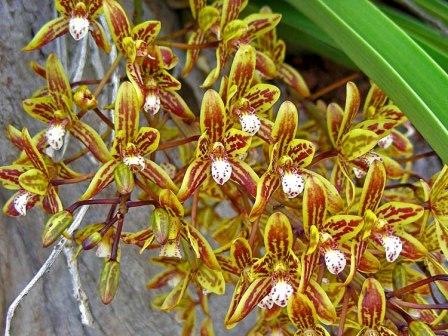
Photo: Gordon Smith, Detail of Orchid Flower. Photo included because I like it!

In my last post, In Search of the Regional Alternative - the case of Katrina and Tom, I reported on an email from Katrina: we are looking for a small town some where who needs the services of a boilermaker who loves a challenge , therein lies the trouble, finding one! "

The first step in the in the search process is to understand your own needs and that of your family. Relocation can be a big step, so you really do need to be clear on your needs before looking seriously at possibilities.

For that reason I emailed Katrina seeking more information. My questions and edited answers follow.

Family Connections

Access to family (parents, grandparents, siblings) can be important, especially for women with children. For that reason I asked "where is your family? Near you? Important to be near them?"

Katrina replied: "The only family we have is my brother and he spends more time overseas than home any way so as long as where ever we go has Internet access then he will be just as close to us as he is now. We do have a very special couple living in Briasbane who are more like family than any one else, but again they are big Internet uses as well and we have discussed this move with them and they think it would be right for us and would give them a place to holiday and an excuse to go! "

Katrina's reply shows that closeness to family is not an issue. However, the reply also draws out that the family are active internet users, so access to the internet is an issue to be considered. Many parts of Regional Australia have equal to if not better internet access than parts of metro Australia, but coverage does vary. So this is an issue that will need to be looked at in considering specific locations.

Children's Needs

No matter how happy parents may be, the move may fail if the needs of children are not taken into account. In this context, Katrina and Tom have four children aged fourteen down to nine weeks.

I therefore emailed Katrina "any special features re education?"

Katrina replied: Education, well my eldest is in grade 8 first year of high school while he isn't brilliant he is holding his own, he travels now to get to a decent school so that will be no big deal for him. The only other concern education wise is my second born who is in grade 6. He has trouble with his reading. He is making progress but slowly, so he would need extra help there. He is on the other hand gifted with maths and the arts. My daughter is well above average so is doing grade 3 and 4 work in her reading yet she is in grade 2 so as long as her teacher is willing to let her move forward at her pace. My youngest obviously has yet to start.

Tom and I love a challenge and our children are not really what you'd call city kids they love to be out doors and don't often play video type games. They email all their friends of course and we all have computers but they still love to run!

We haven't gone into this with our eyes closed we have talked things over with the kids so they are aware of what this would mean, they will miss there friends but will make new ones. They know it and so do I, they are all happy go lucky kids and we would rather they grow up some where where the nastier side of life isn't so in your face all the time, some where that we can feel safe to let them play in their own front yard or to go to the park and know that they will not be harassed or called names for being happy together.

We are a close family as we don't really have any one but each other to rely on so we can be happy any where as long as we have each other and a roof over our heads and plenty to keep dad busy!

Katrina's reply draws out a number of important issues. She and Tom have discussed the move with the kids and have involved them. This is very important since a move away from friends can create real worries in kid's minds.

Education may be an issue in final selection between towns and will need to be investigated. This has to be done on ground. The nature of the support available to the eldest to help with any learning diffculties will be important (country schools can be good in this area because of the personal support that can be provided in a smaller school), as will the capacity of the school to provide accelerated learning opportunities for Katrina and Tom's daughter.

Health services will also need to be investigated on ground. Medical services in a smaller town can be limited, with some services provided in the nearest major regional centre. The critical issue here is not distance but travel time.

Partner Needs

Partner considerations are important in any move because both sides have to be happy.

Katrina's responses focused the needs of Tom and her family, leading me to ask: "What do you want? Do you want to stay at home, to work part time, to work full time? What would you like to do?"

Katrina responded:

What do I want? Well I don't really want to work. I love being a mum and Tom works so I can stay home to raise our kids. Pre children I was working as a seamstress so I love all things making, still do it when I get time, sew that is, I love craft, I quilt, crochet and all things made by hand but my real passion is wood turning I have even sold some on line until getting pregnant and being unable to use the lathe for safety reasons .... I love to read and learn to make new things I am always on the look out for some thing new to try and create.

looking at this, Katrina can be happy pretty much anywhere so long as she and her family have the life style they need.

The life style issue is critical. The life Tom and Katrina want is really no longer obtainable in a metro area. Tom and Katrina need a biggish block with access to a shed and place for the children to play, to dig, to have pets. They need an area in which it is still posssible for the kids to hop on their bikes and vanish without their parents being worried.

In the next post I will discuss how Katrina and Tom might set about finding the job that Tom wants.

Saturday, December 30, 2006

Orange Food and Wine - a postscript


Photo: Orange Farmers Market

Over dinner last night (two different reds plus a desert wine all from Orange) I had a chance to follow up on some more details on the Orange food and wine experience I described in my last post. This described the reaction of my brother-in-law and his wife to their weekend in Orange.

Talking further last night, both said that they would go back to Orange rather than the better known Hunter Valley wine areas. I found this an interesting comment because it shows that Orange is now getting real traction.

In previous posts I have spoken (here, here and here for example) about the impact of travel time. While Australians will travel long distances, two to four hours driving time is about the maximum range that people will drive from their home base for, say, a weekend away.

The Australian wine industry is very competitive, especially for the thousands of small wineries that rely on cellar door or local outlet sales. For that reason, it's not surprising that so many wine regions and wineries are located in a four hour drive circle around major metropolitan centres as both Orange and the Hunter are to Sydney.

As a smaller wine and food area, Orange only needs to attract a small proportion of the Sydney market to continue as a considerable success.

While in Orange Tim and Kim went to the local farmers market. This is held on the second Saturday of the month at the Orange Showground. They were impressed with the quality of the produce, although because the markets really target the upper quality end, produce is not necessarily cheap. If you are interested, you can find out more from the very useful market web site.

One thing that did puzzle me is that while Orange sells its food and wine reputation to attract visitors, there does not appear to be any emphasis on local food in restaurants once the visitor is there.

Now it may be that this is taken for granted, but I still think that it is a mistake since it seems to me that changes in menus centred on the seasonality of local food would add to the experience.

Saturday, September 15, 2007

Going bush for city slickers - working out what you want

Okay, so you have decided that you would like to go bush, whether to live or just for weekends. So what's the first thing you need to do?

This may sound obvious, but you need to decide what you want and how much you are prepared to pay. By pay I mean not just cash, but time and effort.

Starting with what you want. Are you looking for a place to live, or just to visit on weekends?

If you are looking to live there, do you want to make a living from your block or is it to be a base with income coming from elsewhere?

If the first, then you need to start investigating just what is involved in primary production. If the second, then the starting point has to be investigation of job or other income earning possibilities.

If you are looking for a place to visit, a get away, then how much travel time will you allow, what travel costs can you afford, how often do you want to go there?

In all cases, why are you doing this? Write it down. Write down, too, a list of criteria that your new location must meet.

All this done, you are now ready to move to the next stage, investigating possibilities.

Introductory post. Next post.

Sunday, August 20, 2006

Regional Australia - the diversity of regional experience

Italian's Insight to Travel Italy is one of my favourite blogs, bringing the Italian experience alive.

Unlike Australia where so much coverage including tourist promotion centres on a small number of cities, the Italian experience is essentially regional. It would seem simply silly to define Italy in terms just of Rome, or even Rome, Milan and Naples, yet that is what we do in Australia.

Part of the reason for this is historical. Our history since European settlement is so much shorter, allowing less time for regional variations to develop. Part of the reason is structural, the way in which power in Australia has been so concentrated in the various state capitals. Our regions become submerged in a void between the state capital on one side, the national on the other. This does no good to either the metro centres or the regions.

The reality, at least as we see it, is that there are in fact pronounced differences in history and life style between Australia's regions, differences that visitors can taste, those living there experience more directly. This in fact holds even for the metro cities themselves.

Melbourne, for example, is not the same as Sydney in visual appearance, ethnic mix or life style and is in fact becoming more distinct. Sydney itself has a number of quite distinct areas that can be classified as regions or at least localities or districts in their own right, areas as different from each other as Sydney and Melbourne are distinct.

One of our core aims in this blog and on the Regional Living Australia web site is to make the Regional Australia experience more accessible for work, life and play. To do this, we have to find the best way of encapsulating and presenting the differing regional experience across this vast country. This is no easy task.

Our story on Regional Australia & wine provided a summary history of the Australian wine industry, tracing the story from the early foundation to the point where today nearly every area in Regional Australia has its own wine. Experiencing the local wine is part of the joy of a Regional Australia lifestyle for both locals and visitors.

Our story on McLaren Vale and the Fleurieu Peninsula looked at the on-ground position in one geographically small area, an area in which wine, food and geography combine to present a life style experience. The New England Australia blog carried short stories on three very different wine regions within New England, the Hunter Valley, the New England Tablelands and the Hastings Valley.

These four stories draw out a little of the evolving variety but also present the challenge involved in trying to cover so many areas. The challenge does not finish there.

Each regional area has its own history that needs to be set within broader themes. Again, this is presently very fragmented.

In our story Why Wool?, we tried to explain why wool and the wool experience was important to Regional Australia. The Wool in Australia section on the main Regional Living Australia web site presents material on the history of the industry and its impact on regional life, while Explore the Wool Track New England looks at the wool experience across one major regional area, linking it to some other features of regional life.

Because paddle steamers were a major transport mode, this lead us to look at the history and role of paddle steamers along the Murray-Darling River system, leading to a story In Search of the Paddle Steamer again intended to make the experience more accessible.

Regional life consists of a lot more then wine, wool and paddle steamers.

The best selling Australian writer Patrice Newell moved from Adelaide to a property in the Hunter Valley. Her books are in part a tree change story, but they are more than that being detailed and evocative descriptions of local life.

A story on the New England Australia blog, New England Australia - Writers, used Patrice's writing as an entry point to look at the problems involved in understanding regional writing - and there have been a very large number of New England writers - in the absence of defined structures. A second story, In Praise of Patrice Newell, looked at one of her books in more detail, linking it in a personal context to other elements of the New England story.

Sadly, one of the writers mentioned in the New England writing story - Alex Buzo - died a few days after the story was written. Alex was very much a Sydney person who loved the city. However, his experiences living in Armidale and his time at The Armidale School where he studied English under Brian Mattingley had a major formative influence on his life. He saw himself correctly as able to interpret both sides of the metro-regional divide.

The point of these stories is that regional life across Australia involves a complex interlinked web. Understanding this web can enhance the regional experience whether as visitor or resident. Patrice Newell's the River or Judith Wright's Generations of Men are good stand-alone stories. They become still more if you can set them in context.

We began the Regional Living Australia journey with the simple objective of providing people with easier access to information about work, life or play in Regional Australia. This has now broadened to making the regional experience itself more accessible.

This is a vast canvass, one really beyond the capacity of any single site. We need far more regional sites and especially regionally focused blogs if the varying regional experience is to be properly captured and presented. Here our experience with Regional Australia Living on one side, the New England, Australia blog on the other, is instructive. Regional Living allows us to present material across a broad canvas, while New England, Australia drills down into the detail of the regional experience in one Australian region.

Sunday, January 21, 2007

Metro Students Face Housing Difficulties

This is the time of the year when students at Australia's universities start looking for accommodation for the new academic year. This year students in the metro cities and especially Sydney face major problems in finding places to stay at an affordable price.

According to Sydney's Sun Herald (21 January), Sydney vacancy rates are now down to 1.7 per cent, creating a rental crisis, with open for inspections crowded with up to 50 competing house hunters. The problem has become so acute that the Universities of Sydney, New South Wales and UTS have all been forced to advertise to try to find rental places for their students.

In the words of one student, we have to apply for whatever we can get. Another student, a fourth year at Sydney University, has spent all Saturday for the last four weeks inspecting houses. So far she has looked at 40 homes and is astounded at the poor quality of homes on offer.

One $480 per week rental property looked like "a bunch of junkies had been living in it." Students unable to live at home are looking at paying up to $180-200 per week for a single room in share accommodation. Food, travel and communications costs have to be added to this.

Students at universities in Regional Australia's universities are in a much better position. Rental markets can still be tight, but there is a wider range of available accommodation including good college accommodation at much lower rentals. Rental savings can be as much as $12,000 over a three year period for a better standard of accommodation.

Tuesday, July 31, 2007

The Differing Cultures of Regional Australia - Introduction

Note to readers: I am now using this introductory post as an entry point to the various posts that I have written on or around this topic.

Back at the start of June in a comment on one of my posts, an American set out this challenge.

Hi, I'm an American. I was surfing the Internet, trying to learn something about Australia's diverse regions from a cultural perspective as opposed to a merely geographical one. All I turned up was information on Aborigines. Where's the Australian Paul Bunyan? Where's the Johnny Appleseed? Where are the pictures of Eskimos contrasted with lumberjacks, miners, farmers and fishermen? You are right. I almost had to conclude that Australia has no regional flavor at all. (Search for "regional flavor" and you will turn up many websites on wine, but none that pay more than lipservice to culture.)

Now this challenge, one that reflected one of my own complaints about the failure of our regions to present their unique features, actually hurt. Since then I have begun to tease out some of the cultural differences between Australia's regions.

This is no easy task. Australians think of themselves first as Australians. Then they assume that the way they think is in fact simply Australian. In reality, it's not for all areas have their own unique style.

The problem is that to understand and present these differences you actually have to live in an area, submerging yourself in the local culture. Then you have to retain sufficient objectivity to analyse and understand what is in fact local. This is far from easy.

I have neither the time nor the money to travel across Australia submerging myself. But what I can do is to point to some of the more obvious differences, hoping that someone else will come behind to do the more detailed work.

This series:

Next post

Related Material

I will be adding links to related material in due course.

Tuesday, January 23, 2007

Regional Australia - the outdoor experience


Photo: White Water Rafting, Cairns

Outdoor life is central to Australian life in general and to the Regional Australia experience in particular. Our climate helps, as does access to space.

When we think of outdoor life, we think first of the bush including outdoor activities such as white water rafting. For most Australians outdoor life begins at home.

Many people in Australia and elsewhere think of the BBQ as something quintessentially Australia. In fact, the Australian obsession with the BBQ is quite new.

Back in the fifties, people went on picnics, packing thermos, food and a rug into the car and then finding a nice place to sit and eat while the children played. In those days, few Australians drank wine, so drinks were normally limited to tea for the adults, cordial for the kids.

According to Mark Thomson, it was the new migrants from Southern Europe who first really introduced Australians to the idea of outdoor eating. In the beginning, BBQs were sometimes called chop picnics, reflecting the importance of the picnic. Then from the sixties in particular the BBQ spread and spread as did the idea of outdoor eating in general. Beer and then wine were added to the mix.

Today Regional Australians have a wide range of BBQ options open to them. These begin with the home BBQ. Then most local councils provide BBQ sites - wood, gas and electricity - in parks, along creeks or other popular local spots in town. Further afield you will find BBQ facilities at at popular recreation spots around the district. The original chop has been replaced by a wide variety of food and drink.

Regional Australians are also actively involved in sport as watchers and players. Local facilities may not always be as good as those in the metro areas, although they can also be better, but they do have the supreme advantage of closeness. They are also an integral part of community life. This encourages involvement beyond school level in a way not seen in metro areas.

I grew up in Armidale. I haven't counted them all exactly, but this city of 25,000 people has at least the following, all within a six minute drive of each other:

  • a netball complex with a dozen or so courts
  • three cricket ovals as well as other cricket pitches (photo: boys from The Armidale School)
  • four tennis clubs with multiple courts
  • one public swimming pool plus two school/university indoor pools open to locals
  • a soccer complex with a number of co-located fields
  • a dozen or so Rugby fields
  • a fully equipped gym open to locals as well as school gym facilities
  • a hockey complex with multiple hockey fields
  • an indoor bowls, cricket centre
  • a bowling club
  • an extremely attractive golf course
  • race track

Smaller populations mean that some competitive team sports such as Rugby League, Rugby Union or Australian Rules can involve travel with competitions spread across regions. In these cases, games also become social events.


Photo: In the Rainforest, Gordon Smith

Because the country is so much closer, Regional Australians spend much more time there than do their city cousins.

Some choose to live on bigger, semi-rural blocks. Others prefer to bushwalk or camp. Some just to explore. In these smaller communities, townies are more likely to know country people, so that rural life itself is much more accessible and familiar. Many metro kids have never visited a farm or grazing property, have no experience with farm animals outside the Royal Agricultural Shows held in the capital cities.

In addition to these things, those living in Regional Australia also have access to all the tourist facilities and activities established to meet overseas and domestic tourism demand.

Because Regional Australia is so varied, the exact texture of the outdoor experience varies greatly from area to area, providing a menu of possible experiences to those considering relocation.

Thursday, October 26, 2006

Regional Australia - Worthwhile Web Sites


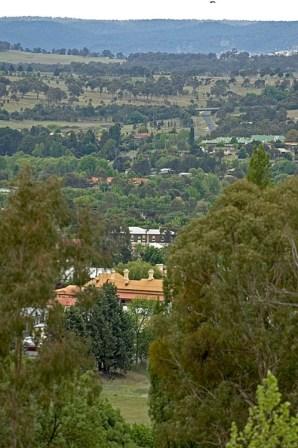
Photo: Gordon Smith, Armidale NSW

Another of my periodic posts on worthwhile web sites found in my travels.

The Australia Blog bills itself as the one stop travel guide to Australia and indeed it does provide access to some interesting material.

yourseachange.com is an interesting on-line magazine providing information for all those interested in tree or sea change. Update 5 August 2010. Sadly this site has turned into an un-related ad platform.

I have mentioned Gordon Smith's Look and See photo blog before because of its wonderful photos of Regional Australia.

Phillip Diprose's Ochre Achives, another blog that I have mentioned before, provides an interesting picture - life, wildlife, soils etc - of one property in regional NSW.

Michael Kiely's Diary of a Carbon Farmer bills itself as : This is the diary of an Australian family who escaped from the city, joined a farming community, and learned to love soil. Carbon Farming is about growing soil carbon - the first link in our food chain. The topsoil is where God's creation is taking place, at every moment. Carbon is the building block of life. By growing it we can restore ecosystems to health. At the same time we can remove Carbon Dioxide from the atmosphere and store it as Carbon in the soil.